Outlast the urge.
The urge rises, crests and passes, usually inside the first ten minutes. Start the ring — ten, fifteen or twenty minutes, fifteen by default — and a grounding card changes every two minutes until it runs out. The round you finish is added to a tally kept in this browser.
15:00
waiting
It passed. It always does.
You reached out. That’s information, not failure.
Something about tonight made the wait unbearable, and that is worth knowing before the next one. Here is what to do in the next hour.
While you wait
Breathe in for four. Hold for seven. Out for eight. Three rounds, then look at the ring.
Name five things you can see. Out loud, if you are alone.
Cold water on the inside of your wrists. Thirty seconds of it.
Put the phone in another room. Come back when the ring is full.
Say it somewhere it cannot be sent. Write it here instead, then burn it.
Your round and your tally are kept in this browser.
How the timer works
Three lengths, ten, fifteen and twenty minutes, with fifteen as the default. The ring is a stroke on a circle of radius 124, so its full circumference of about 779 pixels is the length the elapsed fraction is drawn against, and it repaints four times a second. The grounding card underneath changes every two minutes and there are five of them, dealt in order and then from the top again: a ten-minute round shows all five, a fifteen-minute round comes back round to the second, and a twenty-minute round runs the set twice.
Two of those numbers are ours. Fifteen minutes is not a published duration for how long an urge lasts — nobody can publish that, because urges differ by person, night and trigger — and it was chosen as long enough to be a real wait and short enough to be startable at one in the morning. The two-minute card cycle is the same kind of choice: often enough that there is something new to read, rarely enough that reading it is not the task.
The state is kept in this browser under one key: when the current round started, how long it is, and how many rounds you have finished. A round abandoned more than six hours ago is dropped rather than resumed, because a timer that quietly counts a night you walked away from is not counting anything. Open the page in another browser and the tally starts at zero.
What is behind the shape of the thing is Alan Marlatt's work on cravings, which named urge surfing: rather than fighting an urge or obeying it, you watch it rise, crest and pass. The reliable finding is the shape, not a number of minutes. And the case for waiting at all is Sbarra and Emery's daily-diary study, which found that days with contact carried both more love and more sadness than the days without — contact does not undo the grief, it interrupts the decline of it.
Where these numbers come from
- The emotional sequelae of nonmarital relationship dissolution: Analysis of change and intraindividual variability over time — Sbarra & Emery, Personal Relationships (University of Arizona research profiles)
Nothing on this site is medically reviewed and nobody here is a therapist. Every figure above was read out of the code that runs on this page, and where a number is our own judgement rather than a published one, the note says so and cites nothing. Method last checked 21 August 2026.
Why waiting is the whole technique
At 1am the message feels like the only thing that will stop the feeling. It will not, and you know that already — the part of you holding the phone is not the part reading this. So the plan is not to win the argument. The plan is to be slower than the urge.
Urges rise, crest and pass
Alan Marlatt's work on cravings gave this its name: urge surfing. Instead of fighting an urge or obeying it, you watch it — where it sits in your body, what it is telling you to do — and let it run its course. Cravings behave like waves. They build, they peak, they drop, and they do it whether or not you act.
The shape is the reliable part, not a number of minutes. Some urges thin out quickly, some need a second round, and a bad night can bring several. What changes over weeks is the size of them: every wave you sit through is evidence to your own nervous system that it ends without a reply.
What the text actually costs
In a daily-diary study, David Sbarra and Robert Emery followed people through the weeks after a breakup and found that days with contact carried more love and more sadness than the days without. Contact does not undo the grief; it interrupts the decline of it, and the wave you were most of the way through starts again from the top.
That is the honest case for waiting fifteen minutes. Not that the message is forbidden, but that it reliably costs you the ground you already covered. The six texts people actually try to send are worth reading when you are calm, because each one is asking for something a reply cannot deliver.
If you sent it anyway
Then you sent it. It is a normal thing to do and it is not the end of the run — the day count measures distance, not worth. Expect a wave in the next day or two, because contact re-spikes both feelings, and then carry on from where you are. This is what the next hour looks like. The distance itself is worth seeing: the no contact counter counts from the last time you reached out, so today has a number whether or not last night did.
Frequently asked questions
What is urge surfing?
Why does the urge spike at night?
Does the urge mean we should be together?
What if 15 minutes is not enough?
Does blocking help?
More tools
Grey Rock Trainer
Paste the reply you were about to send and see what it gives them. Then draw a flatter one.
Breakup Recovery Timeline
Six questions, no promised date. A phase map built from published research instead of the half-the-relationship rule.
Read This When
Write to yourself while you are thinking clearly. The tool hands the right note back at the moment you are not.
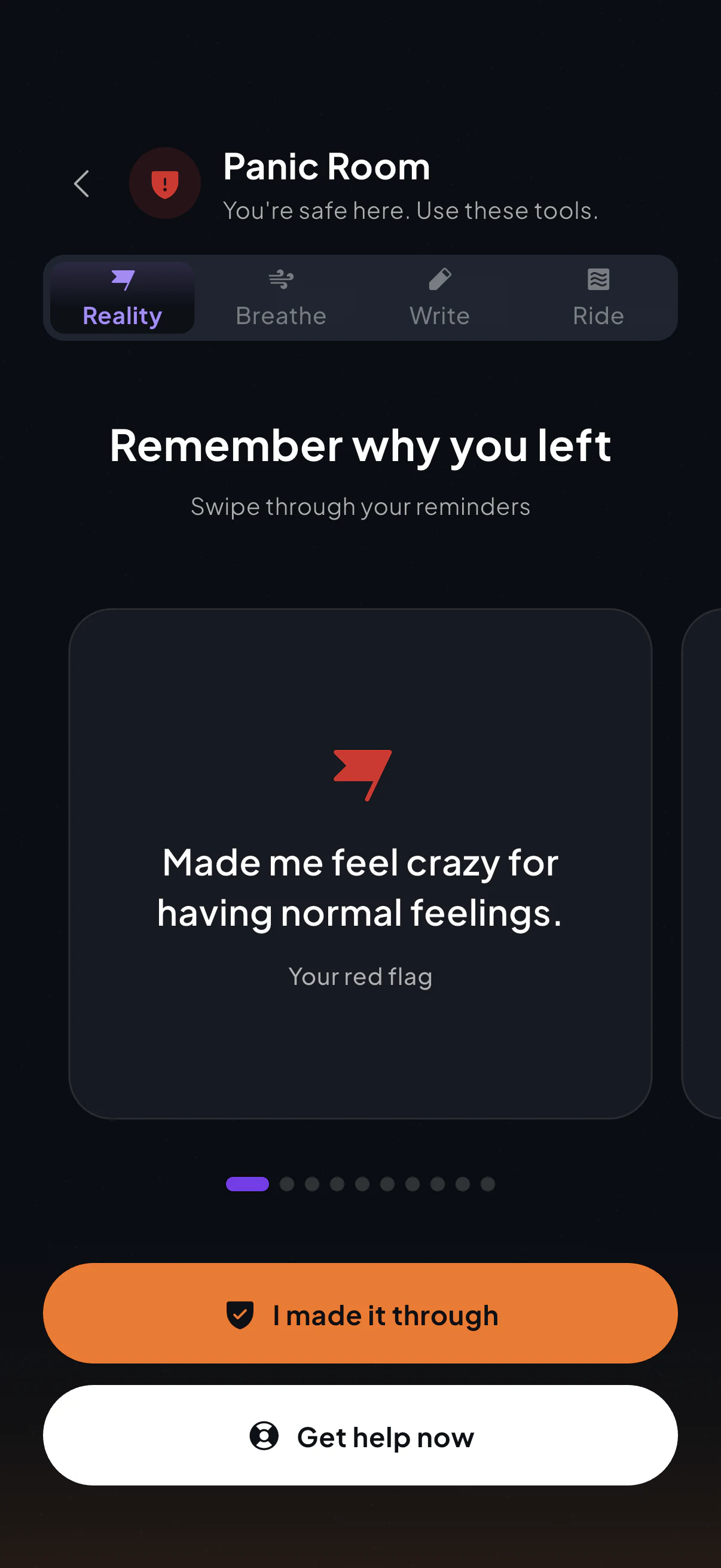
The panic room is this, one tap away
Ghosted puts the timer, a breath, your reasons and an unsent letter behind one button — and counts every night you got through.